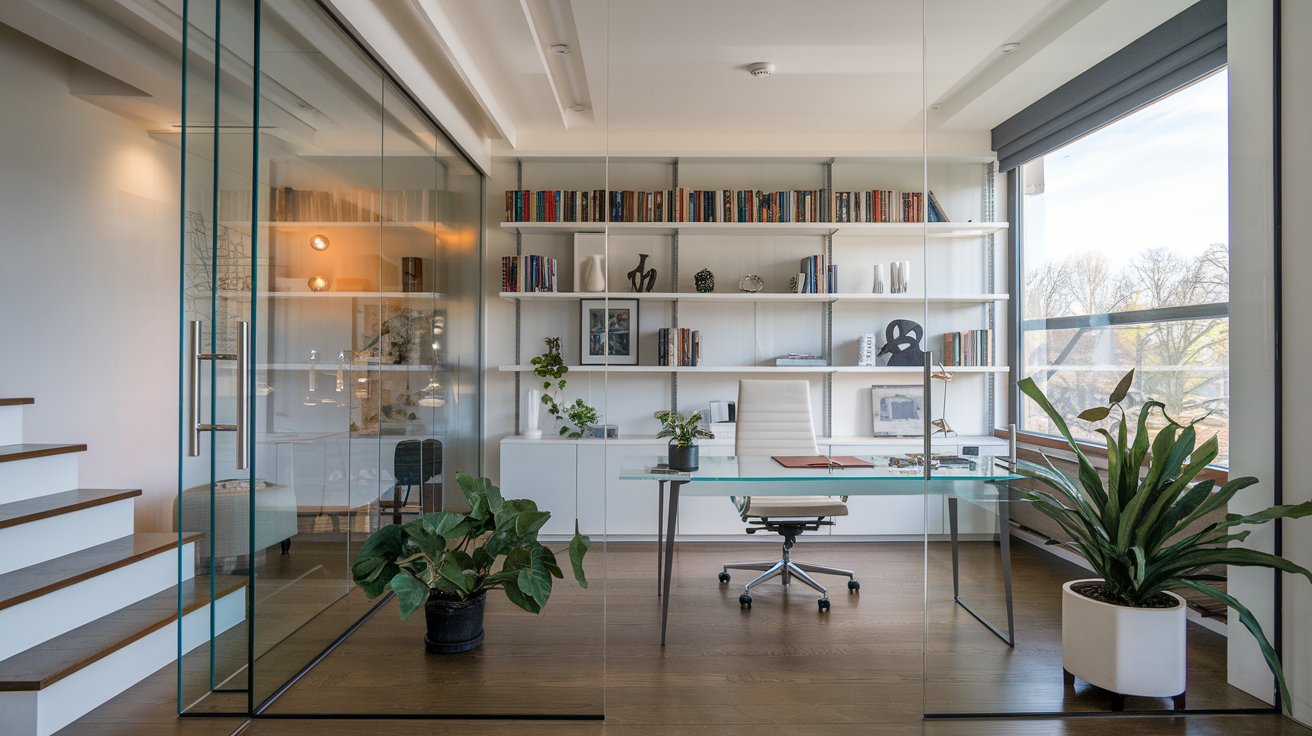
Creating a home office with glass walls transforms your workspace into a modern, sophisticated environment that maximizes natural light while maintaining professional separation. Glass walls in home offices have become increasingly popular in 2025, offering the perfect balance between openness and productivity. This comprehensive guide explores design ideas, costs, benefits, and practical considerations for incorporating glass walls into your home workspace.
Benefits of Glass Walls in Home Offices
A home office with glass walls provides numerous advantages that enhance both functionality and aesthetics. The primary benefit is increased natural light penetration, which studies show can improve productivity by up to 15% and reduce eye strain during long work sessions. Glass walls create visual continuity throughout your home while maintaining acoustic separation when properly installed.
The transparency of glass office walls helps maintain connection with family members while clearly defining work boundaries. This design solution is particularly effective in open-concept homes where space delineation is crucial. Additionally, glass walls make smaller spaces appear larger, creating an illusion of expanded square footage that benefits both the home office and adjacent areas.
Enhanced Natural Light Distribution
Glass walls allow natural light to flow freely throughout your home, reducing dependence on artificial lighting during daytime hours. This feature is especially valuable in home offices positioned away from exterior windows. The enhanced lighting can reduce electricity costs by approximately 20-30% annually while creating a more inviting workspace atmosphere.
Professional Appearance for Video Calls
Modern home office with glass walls creates an impressive backdrop for video conferences and client meetings. The sleek, contemporary appearance conveys professionalism while the transparent barriers provide visual interest without distracting clutter. Many professionals report increased confidence during virtual meetings when working from aesthetically pleasing glass-walled offices.
Glass Wall Types and Materials for Home Offices
Several glass wall options are available for home offices, each offering unique benefits and price points. Tempered glass provides safety and durability, while laminated glass offers superior sound control. Smart glass technology, increasingly popular in 2025, allows users to switch between transparent and opaque states with electrical controls, providing privacy on demand.
Frosted or textured glass walls offer partial privacy while maintaining light transmission. These options are ideal for home offices requiring occasional privacy without complete visual separation. Frame materials include aluminum, steel, and wood, with aluminum being the most cost-effective and durable option for residential applications.
Tempered Glass Solutions
Tempered glass is the most common choice for home office walls due to its safety features and strength. This glass type is four times stronger than regular glass and breaks into small, less dangerous pieces if damaged. Tempered glass walls typically cost between $15-25 per square foot installed, making them accessible for most home office projects.
Smart Glass Technology
Smart glass walls represent the cutting edge of home office design in 2025. These systems use electrochromic or PDLC technology to change opacity instantly. While more expensive at $50-100 per square foot, smart glass offers unmatched flexibility for home offices requiring both openness and privacy throughout the day.
Cost Analysis: How Much Do Glass Office Walls Cost?
The cost of installing a home office with glass walls varies significantly based on glass type, size, and installation complexity. Basic tempered glass systems range from $12-20 per square foot for materials, with installation adding $8-15 per square foot. A typical 100-square-foot glass wall installation costs between $2,000-3,500 for standard applications.
Premium options like smart glass walls or custom framing systems can increase costs to $8,000-15,000 for the same area. However, the investment often pays dividends through increased home value and improved work productivity. Real estate professionals report that well-designed glass-walled home offices can add 3-5% to property values in competitive markets.
Design Ideas for Modern Home Offices with Glass Walls
Contemporary home office with glass walls designs emphasize clean lines, minimal framing, and seamless integration with existing architecture. Floor-to-ceiling installations create dramatic visual impact while maximizing light transmission. Corner glass walls can define L-shaped or U-shaped office spaces within larger rooms effectively.
Incorporating glass walls and doors as a complete system provides both access and enclosure options. Sliding glass doors are particularly popular for their space-saving benefits and smooth operation. The combination allows homeowners to open or close their office space as needed throughout the day.
Small Home Office with Glass Walls
For compact spaces, a small home office with glass walls maximizes the perception of space while maintaining functionality. Partial glass walls extending 6-7 feet high provide separation without completely closing off the area. This approach works exceptionally well in studio apartments or homes with limited dedicated office space.
Integration with Open Concept Layouts
In open-concept homes, glass office walls serve as sophisticated room dividers that maintain architectural flow. These installations can separate home offices from living areas, kitchens, or dining spaces without disrupting natural light patterns or sight lines. The transparency preserves the open feeling while creating necessary work boundaries.
Sound Control Solutions for Glass-Walled Offices
One primary concern with glass walls is sound transmission, but modern solutions effectively address this challenge. Double-glazed glass systems with air gaps provide significant noise reduction, while laminated glass incorporates sound-dampening interlayers. Proper sealing around frames is crucial for optimal acoustic performance.
Strategic placement of sound-absorbing materials in adjacent areas can further enhance privacy. Soft furnishings, area rugs, and acoustic panels complement glass office walls by reducing overall noise levels in surrounding spaces. Many professionals find that the visual separation alone helps maintain focus, even with minimal sound barrier.
Installation Considerations and Requirements
Installing a home office with glass walls requires careful planning and professional expertise. Structural considerations include floor load capacity, ceiling attachment points, and existing electrical or plumbing systems. Most installations require building permits, particularly when altering load-bearing elements or creating permanent structures.
Timeline for glass wall installation typically ranges from 2-4 weeks from measurement to completion. This includes custom glass fabrication, frame preparation, and final installation. Working with experienced contractors ensures proper integration with existing architecture and compliance with local building codes.
DIY vs Professional Installation
While some glass wall systems offer DIY-friendly options, professional installation is recommended for safety and performance. Glass handling requires specialized tools and experience to prevent damage or injury. Professional installers also ensure proper sealing, alignment, and structural integrity that DIY installations might compromise.
Permit and Code Requirements
Most glass office walls installations require permits from local building departments. Safety glass requirements, structural modifications, and electrical work all fall under building code jurisdiction. Professional contractors typically handle permit applications and ensure compliance with local regulations throughout the installation process.
Maintenance and Care for Glass Office Walls
Maintaining glass walls in home offices is straightforward with proper techniques and regular attention. Weekly cleaning with appropriate glass cleaners maintains clarity and professional appearance. Microfiber cloths prevent scratching while removing dust, fingerprints, and other common markings that accumulate on glass surfaces.
Long-term maintenance includes checking frame seals, adjusting door hardware, and addressing any chips or cracks promptly. Professional maintenance services are available for complex installations or when specialized cleaning equipment is required. Proper care ensures glass office walls maintain their appearance and functionality for decades.
Popular Alternatives to Traditional Glass Walls
While traditional glass walls remain popular, several alternatives offer similar benefits with different characteristics. Acrylic panels provide similar transparency at lower cost but with reduced durability. Glass block systems offer partial transparency with enhanced privacy and unique aesthetic appeal.
Polycarbonate panels offer impact resistance superior to glass while maintaining excellent light transmission. These alternatives may be appropriate for specific applications where traditional glass office walls present challenges or exceed budget constraints. Each option provides distinct advantages depending on individual requirements and design preferences.
Related video about home office with glass walls
This video complements the article information with a practical visual demonstration.
Important things to know about home office with glass walls
How much do glass office walls cost?
Glass office walls typically cost between $20-35 per square foot installed for standard tempered glass systems. A complete home office installation ranges from $2,000-8,000 depending on size and features. Smart glass options can cost $50-100 per square foot, while basic systems start around $15 per square foot for materials only.
What are the disadvantages of glass walls?
The main disadvantages of glass walls include limited privacy, potential sound transmission, higher cleaning requirements, and safety concerns if not properly installed. Glass walls also offer no surface for mounting shelves or artwork directly. However, modern solutions like smart glass and proper acoustic treatments address most of these concerns effectively.
What do you call a room with glass walls?
A room with glass walls is commonly called a glass office, glass room, or glass-enclosed space. In commercial settings, these are often termed glass conference rooms or glass offices. For home applications, they’re typically referred to as glass-walled home offices or modern office spaces with glass partitions.
Why do law offices have glass walls?
Law offices use glass walls to maintain client confidentiality while providing visual supervision and security. Glass walls allow partners to oversee work areas, create impressive client spaces, and maximize natural light in often windowless interior offices. The transparency also demonstrates openness and professionalism to clients while maintaining necessary privacy through soundproofing.
Can glass walls provide adequate privacy for home offices?
Yes, glass walls can provide adequate privacy through various solutions including frosted glass, smart glass technology, or strategic placement of furniture and accessories. Many homeowners find that visual separation alone is sufficient for home office privacy, while soundproofing techniques address acoustic concerns when needed.
Are glass walls energy efficient for home offices?
Modern glass walls are highly energy efficient when properly specified and installed. Double-glazed systems provide excellent insulation, while the increased natural light can reduce artificial lighting needs by 20-30%. Energy-efficient glass options include low-E coatings and argon-filled double-pane systems that minimize heat transfer.
| Glass Wall Type | Cost Per Sq Ft | Key Benefits |
|---|---|---|
| Tempered Glass | $20-35 | Safety, durability, cost-effective |
| Smart Glass | $50-100 | Privacy control, modern technology |
| Frosted Glass | $25-40 | Privacy, light transmission |
| Laminated Glass | $30-45 | Sound control, security |