Creating simple stained glass art design projects has never been more accessible for beginners in 2024. This comprehensive guide reveals essential techniques, pattern selection, and material choices that transform ordinary glass into stunning artistic masterpieces. Whether you’re seeking free patterns or professional-grade designs, mastering these fundamental skills opens doors to a rewarding creative hobby.
Getting Started with Simple Stained Glass Art Design
Beginning your journey in simple stained glass art design requires understanding core principles before diving into complex projects. The art form combines technical precision with creative expression, making it ideal for crafters who enjoy detailed work. Modern techniques have simplified traditional methods, allowing beginners to achieve professional-looking results within weeks of practice.
Successful stained glass projects start with proper planning and realistic expectations. Free stained glass patterns provide excellent starting points for newcomers, offering tested designs that balance beauty with manageable complexity. The key lies in choosing projects that match your current skill level while gradually building confidence through completed pieces.
Essential Tools and Materials for Beginners
Every stained glass beginner needs specific tools to ensure safe, accurate cutting and assembly. Basic equipment includes glass cutters, grozing pliers, breaking pliers, and safety glasses. A light table or illuminated work surface dramatically improves pattern visibility and cutting precision. Quality tools make the learning process smoother and produce better finished pieces.
Choosing Your First Glass Types
Glass selection significantly impacts both project difficulty and final appearance. Cathedral glass offers excellent light transmission and forgiving cutting properties, making it perfect for simple stained glass art design patterns. Opalescent glass provides rich colors but requires more advanced cutting techniques. Starting with 3mm cathedral glass in basic colors builds fundamental skills without overwhelming complexity.
Free Stained Glass Patterns and Design Resources
Accessing quality free stained glass patterns eliminates the initial investment barrier while providing proven designs for skill development. Numerous online repositories offer downloadable patterns ranging from simple geometric shapes to intricate floral motifs. These resources typically include full-size templates, glass cutting lists, and assembly instructions tailored for different skill levels.
Pattern selection should align with available time, budget, and current abilities. Simple stained glass art design free download options often feature 10-20 pieces maximum, perfect for weekend projects. More complex patterns may contain 50+ pieces, requiring weeks of dedicated work but resulting in museum-quality finished pieces.
Where to Find Quality Free Patterns
Reputable stained glass websites offer extensive free stained glass patterns libraries with designs categorized by difficulty level. Many include detailed tutorials and video demonstrations showing proper cutting and assembly techniques. Community forums also provide peer-reviewed patterns shared by experienced artisans, often with helpful tips and modification suggestions.
Understanding Pattern Scaling and Modifications
Downloaded patterns may require resizing to fit specific project dimensions or available glass sheets. Simple stained glass art design pdf files typically scale proportionally using standard printer settings. Advanced practitioners often modify existing patterns by simplifying complex curves or adjusting color schemes to match available glass inventory while maintaining design integrity.
Glass Cutting Techniques for Simple Designs
Mastering glass cutting forms the foundation of successful simple stained glass art design projects. Proper scoring technique involves consistent pressure and smooth, continuous motion from edge to edge. The glass cutter should be held perpendicular to the surface with adequate lubrication to prevent chipping and ensure clean breaks.
Practice sessions using inexpensive clear glass build muscle memory and confidence before working with expensive colored glass. Glass cutting requires patience and steady hands, but basic straight cuts become second nature with dedicated practice. Curved cuts demand more advanced techniques but remain achievable for determined beginners.
Understanding Glass Properties and Color Selection
Different glass types exhibit unique characteristics affecting both cutting difficulty and visual impact. Cathedral glass offers uniform thickness and predictable breaking patterns, making it ideal for precise geometric designs. Opalescent glass contains swirls and variations that add visual interest but require careful pattern placement to avoid waste.
Color selection dramatically influences mood and overall aesthetic appeal. Warm colors like reds and yellows create welcoming, energetic feelings, while cool blues and greens evoke tranquility. The rarest color of stained glass is true red, historically achieved using gold particles, making it more expensive than standard colors available today.
Working with Transparent vs Opaque Glass
Transparent glass allows maximum light transmission, creating brilliant color displays when backlit. Simple stained glass art design projects using transparent glass work exceptionally well in windows and light boxes. Opaque glass blocks light transmission but offers rich surface textures and deeper color saturation perfect for decorative panels and artistic compositions.
Color Compatibility and Light Effects
Adjacent colors influence each other through light transmission and reflection. Color theory principles guide effective combinations, with complementary colors creating dramatic contrasts and analogous colors providing harmonious blends. Testing color combinations using small sample pieces prevents costly mistakes in larger projects.
Copper Foil Method for Beginners
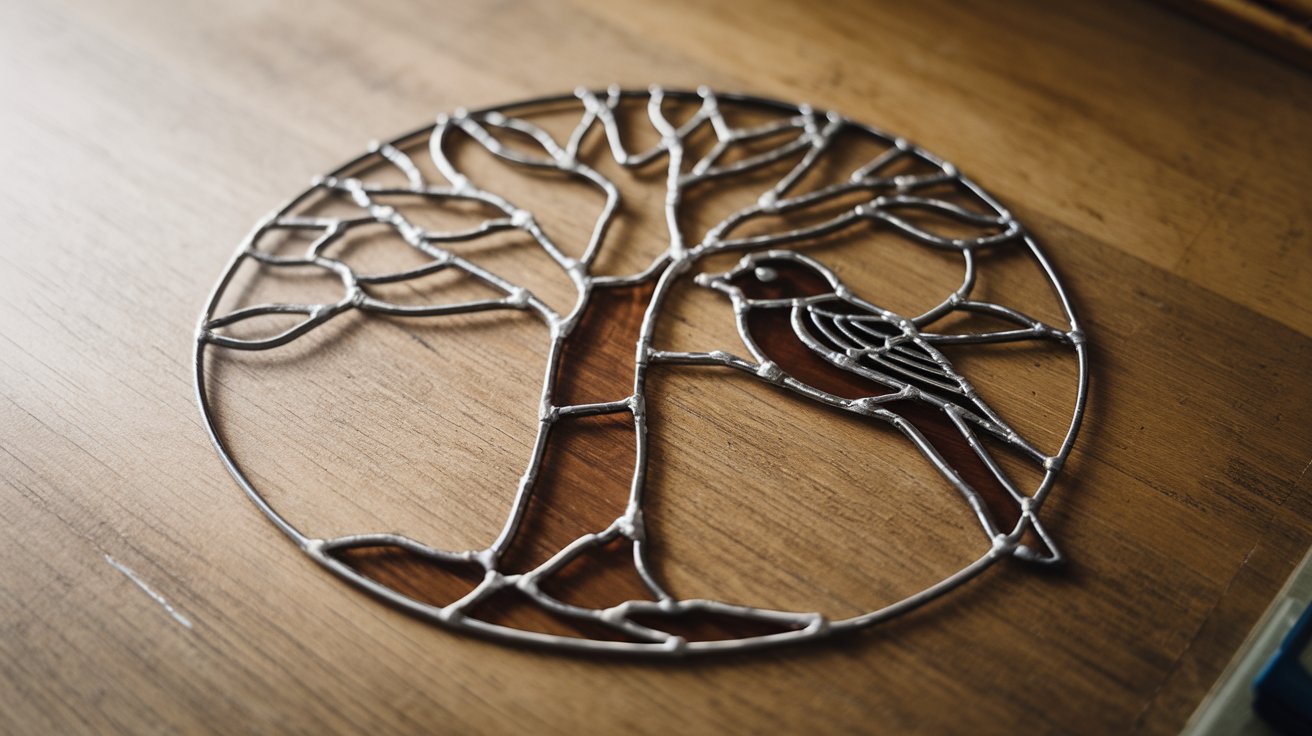
The copper foil technique revolutionized simple stained glass art design by enabling intricate details impossible with traditional lead came methods. This approach involves wrapping each glass piece with adhesive copper tape before soldering joints together. The method suits beginners because it allows corrections and modifications during assembly.
Proper foil application requires consistent overlap and firm adhesion to glass edges. Copper foil comes in various widths, with 7/32-inch being standard for most projects. Quality foil features strong adhesive backing that bonds permanently to clean glass surfaces, ensuring long-lasting structural integrity in finished pieces.
Lead Came Technique and Applications
Traditional lead came construction offers durability and authentic medieval aesthetics for simple stained glass art design projects. This method uses H-shaped lead strips to hold glass pieces in grooved channels. Lead came works best for larger pieces with straight or gently curved lines, making it ideal for architectural applications and traditional window panels.
Modern lead came contains antimony for increased strength and longevity compared to historical pure lead versions. Lead came requires different tools and techniques than copper foil, including lead knives, lead vises, and specialized cementing compounds for weatherproofing outdoor installations.
Choosing Between Copper Foil and Lead Came
Project requirements determine the best construction method for stained glass patterns for beginners. Copper foil excels for detailed work, three-dimensional projects, and pieces requiring tight curves. Lead came suits larger windows, geometric designs, and projects requiring maximum structural strength for permanent installations.
Safety Considerations with Lead Materials
Working with lead came requires proper ventilation and protective equipment to prevent lead exposure. Safety measures include wearing gloves, using dust masks, and washing hands thoroughly after handling lead materials. Modern alternatives like zinc came offer similar structural properties with reduced health concerns for hobbyists.
Pattern Creation and Design Drawing
Creating original simple stained glass art design patterns begins with understanding fundamental design principles and practical construction limitations. Successful patterns balance visual appeal with technical feasibility, considering glass cutting constraints and structural requirements. Hand-drawn sketches often translate better to stained glass than computer-generated designs because they naturally incorporate the organic irregularities that make handcrafted pieces unique.
Pattern development involves multiple iterations and refinements before finalizing cutting templates. Design drawing requires understanding how lead lines or copper foil joints will affect visual flow and structural integrity. Professional patterns include detailed assembly diagrams, glass specifications, and cutting sequence recommendations for optimal results.
Soldering Techniques and Patina Application
Proper soldering creates strong, visually appealing joints that define the character of finished simple stained glass art design projects. Temperature control and flux application ensure smooth solder flow and consistent bead formation. Quality 60/40 solder provides optimal working time and strength for most hobby applications, while lead-free alternatives offer environmental benefits.
Patina application transforms bright solder joints into elegant finishes matching project aesthetics. Patina chemicals require careful handling and adequate ventilation but produce dramatic color changes from silver to black, copper, or custom tones. Proper cleaning and preparation ensure even patina coverage and long-term durability of finished pieces.
Supply Sources and Cost Management
Finding affordable supplies enables sustainable simple stained glass art design practice without breaking household budgets. Major craft retailers like Hobby Lobby periodically carry basic stained glass supplies, though selection may be limited compared to specialized dealers. Many hobbyists wonder does Hobby Lobby sell stained glass supplies, and yes, they stock essential items during peak crafting seasons, often with competitive pricing and coupon discounts.
Online suppliers offer extensive inventories and bulk pricing options that reduce per-project costs significantly. Joining local stained glass guilds or clubs provides access to group purchasing power and experienced mentorship. Cost management strategies include buying glass remnants, sharing large sheet purchases with fellow crafters, and gradually building tool collections through strategic sales shopping.
Related video about simple stained glass art design
This video complements the article information with a practical visual demonstration.
Key Questions and Answers
What does a beginner need for stained glass?
Beginners need essential tools including a glass cutter, breaking pliers, grozing pliers, safety glasses, and a cutting surface. Basic supplies include copper foil or lead came, flux, solder, and patina. A starter kit typically costs $150-300 and includes enough materials for several small projects. Many craft stores offer beginner packages with tools, glass, and simple patterns.
What is the rarest color of stained glass?
True red stained glass is the rarest and most expensive color, historically created using gold particles suspended in the glass mixture. This process made red glass extremely costly, leading medieval artisans to use it sparingly. Modern manufacturing has made red more accessible, but premium quality red glass still commands higher prices than standard colors due to complex production requirements.
Does Hobby Lobby sell stained glass supplies?
Yes, Hobby Lobby carries basic stained glass supplies including glass sheets, copper foil, basic tools, and simple patterns. Their selection varies seasonally and by location, with peak inventory during spring and fall crafting seasons. They often offer 40% off coupons that make their supplies competitive with specialized retailers, though serious hobbyists may need additional sources for advanced materials.
What is the hardest part of stained glass?
The hardest part of stained glass for beginners is achieving consistent, clean glass cuts, especially on curved lines. This requires developing proper pressure control, hand stability, and understanding glass grain patterns. Advanced challenges include complex soldering joints, maintaining structural integrity in large pieces, and achieving professional-quality patina finishes. Patience and practice overcome these difficulties over time.
How long does it take to complete a simple stained glass project?
Simple stained glass projects with 10-15 pieces typically require 8-15 hours over several sessions for beginners. This includes pattern preparation, glass cutting, foiling or leading, soldering, and finishing work. Complex pieces with 30+ pieces may take 25-40 hours. Experience significantly reduces completion time as cutting accuracy and soldering speed improve with practice.
Can stained glass be made without expensive equipment?
Basic stained glass projects can be completed with minimal equipment costing under $100. Essential items include a simple glass cutter, pliers, safety glasses, and copper foil. A kitchen table with good lighting serves as an adequate work surface for small projects. While professional equipment improves results and efficiency, beginners can create beautiful pieces using basic tools and techniques.
| Design Aspect | Beginner Recommendation | Key Benefit |
|---|---|---|
| Pattern Selection | Free geometric designs with 10-15 pieces | Manageable complexity builds confidence |
| Glass Type | 3mm cathedral glass in basic colors | Predictable cutting and affordable pricing |
| Construction Method | Copper foil technique | Allows corrections and detailed work |
| Tool Investment | Basic starter kit under $200 | Low barrier to entry for new hobbyists |
| Learning Timeline | Complete first project within 2 weeks | Quick satisfaction and skill development |