A tempered glass backsplash for kitchen spaces has become the premier choice for homeowners seeking both functionality and elegance. This comprehensive guide covers everything you need to know about selecting, installing, and maintaining glass backsplashes that transform your kitchen while providing superior protection and easy maintenance.
What Is Tempered Glass and Why Choose It for Kitchen Backsplashes
Tempered glass backsplash materials are created through a specialized heating and cooling process that makes them up to five times stronger than regular glass. This safety glass undergoes thermal tempering at temperatures exceeding 1,200°F, creating internal stresses that enhance durability. When broken, tempered glass shatters into small, relatively harmless pieces instead of dangerous shards, making it ideal for kitchen environments where safety is paramount.
The manufacturing process involves heating regular glass to extreme temperatures, then rapidly cooling it with jets of cold air. This creates compressive stress on the surface while maintaining tensile stress in the interior. The result is a kitchen backsplash material that resists thermal shock, scratches, and impacts far better than standard glass options available in 2025 markets.
Benefits and Advantages of Glass Backsplashes
Tempered glass backsplashes offer numerous advantages that make them increasingly popular among American homeowners. The non-porous surface prevents bacteria growth and staining, while the smooth finish makes cleaning effortless with just soap and water. Unlike tile backsplashes with grout lines, glass surfaces eliminate spaces where grease and grime can accumulate, making them exceptionally hygienic for food preparation areas.
Heat resistance is another crucial benefit, as tempered glass can withstand temperatures up to 470°F without cracking or discoloration. This makes them perfect for installation behind stovetops and cooking areas. Additionally, the reflective properties of glass help distribute light throughout the kitchen, creating an illusion of expanded space while adding brightness to work areas.
Durability and Safety Features
The most durable backsplash options include tempered glass, which scores highest on impact resistance tests compared to ceramic, natural stone, or standard glass alternatives. Industry testing shows that tempered glass backsplashes can withstand impacts up to 25,000 pounds per square inch, significantly outperforming traditional materials. This exceptional strength rating makes them ideal for busy family kitchens where accidents are more likely to occur.
Low Maintenance Requirements
Maintenance of glass backsplash installations requires minimal effort compared to other materials. The smooth, non-textured surface prevents food particles and grease from adhering permanently. Weekly cleaning with standard glass cleaner or a mixture of white vinegar and water maintains the pristine appearance. Unlike natural stone or tile surfaces, glass backsplashes never require sealing, special cleaners, or professional maintenance services.
Design Ideas and Style Options for 2025
Modern glass backsplash kitchen ideas encompass a vast range of styles, colors, and textures to complement any design aesthetic. Clear glass options create seamless, minimalist looks that work particularly well with contemporary and transitional kitchen designs. Colored glass backsplashes in deep blues, emerald greens, or warm amber tones serve as stunning focal points that can tie together entire color schemes while maintaining the practical benefits of glass surfaces.
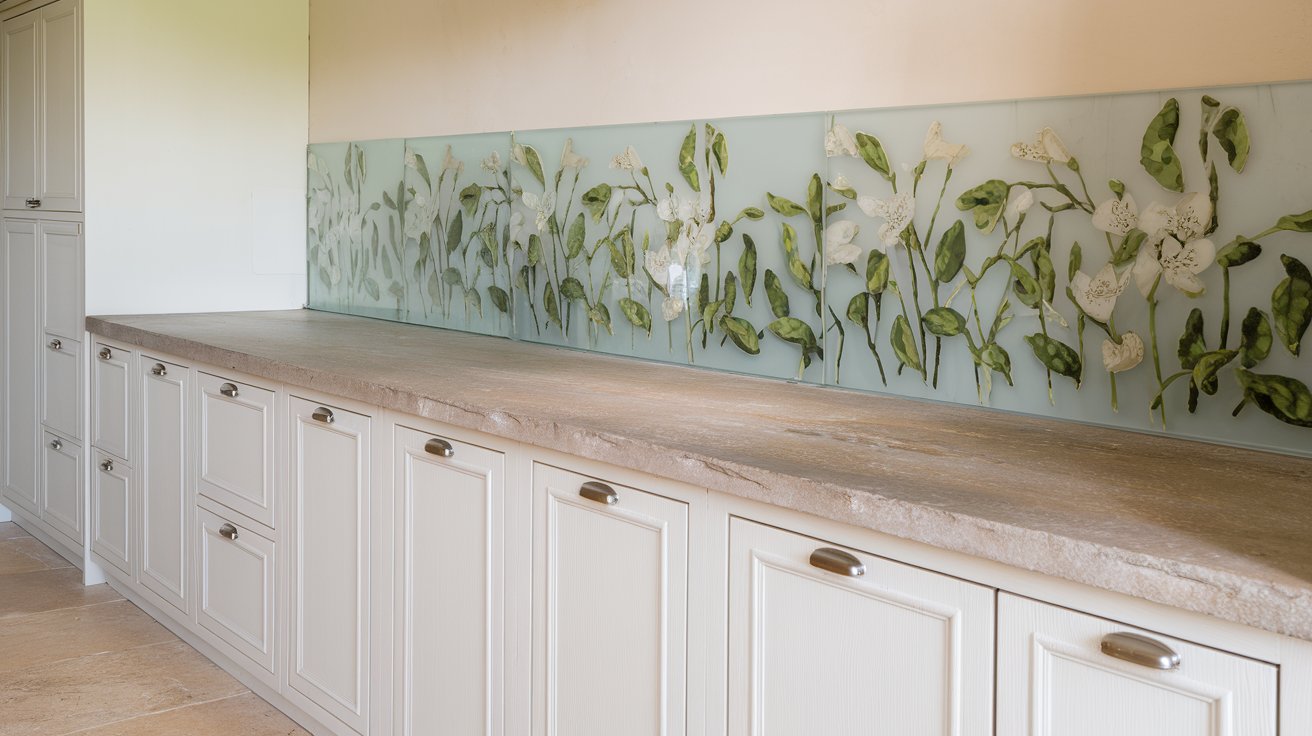
Textured glass options have gained popularity in 2025, offering visual interest while maintaining easy cleaning properties. Frosted, etched, or patterned glass provides privacy from neighboring windows while diffusing light beautifully. Custom tempered glass backsplash designs allow homeowners to incorporate personal artwork, photographs, or unique patterns that reflect individual style preferences and create truly one-of-a-kind kitchen environments.
Color and Pattern Combinations
The versatility of tempered glass backsplash materials allows for unlimited color customization through back-painting techniques. Popular 2025 trends include deep jewel tones like sapphire blue and emerald green, which create dramatic contrasts against white cabinetry. Neutral options such as soft grays, warm beiges, and crisp whites provide timeless appeal that won’t clash with future design changes or appliance upgrades.
Integration with Cabinet and Countertop Styles
Successful kitchen backsplash integration requires careful consideration of existing elements. Glass backsplashes complement quartz countertops beautifully, creating cohesive, modern appearances. With wooden cabinetry, colored glass can either provide contrast or harmonize with wood tones. The reflective properties of glass help highlight cabinet hardware and countertop patterns, enhancing the overall visual impact of kitchen designs.
Installation Process and Professional Considerations
Professional installation of tempered glass backsplash systems requires specialized skills and tools to ensure proper fit and safety. The process begins with precise measurements and template creation, as tempered glass cannot be cut or modified after manufacturing. Wall preparation includes ensuring perfectly level surfaces, as any irregularities will be visible through the glass. Professional installers typically charge between $15-25 per square foot for labor in major US cities as of 2025.
The installation process involves applying structural glazing adhesive to the wall surface, then carefully positioning the glass panels. Proper spacing and alignment are critical, as adjustments cannot be made once the adhesive begins curing. How to install tempered glass backsplash safely requires understanding load distribution, thermal expansion properties, and proper ventilation around heat sources like stovetops and ovens.
Tools and Materials Required
Professional tempered glass backsplash installation requires specific tools including structural glazing compounds, silicone sealants rated for kitchen use, and precision measuring equipment. Installers use specialized suction cup systems to handle large glass panels safely, preventing fingerprints and ensuring secure grip during positioning. Safety equipment including cut-resistant gloves and safety glasses are essential throughout the installation process.
Timeline and Project Planning
Complete kitchen backsplash installation projects typically require 2-3 weeks from initial measurement to final completion. Custom glass manufacturing adds 7-10 business days to standard timelines, while standard sizes may be available within 3-5 days. Professional installation usually takes 4-6 hours for average kitchen sizes, depending on complexity and the number of cutouts required for outlets, switches, and fixtures.
Cost Analysis and Budget Planning for 2025
Tempered glass backsplash costs vary significantly based on size, customization level, and installation complexity. Standard clear glass options range from $12-18 per square foot for materials, while custom colors or patterns can cost $20-35 per square foot. Professional installation adds $15-25 per square foot in most US markets, bringing total project costs to $27-60 per square foot for complete installations including materials and labor.
Budget planning should include additional costs for electrical work if new outlets are required, wall preparation for uneven surfaces, and potential appliance removal for behind-stove installations. Custom tempered glass backsplash projects with intricate designs or unusual shapes may require premium pricing due to specialized manufacturing requirements and increased installation complexity.
Where to Purchase Quality Glass Backsplashes
Sourcing high-quality tempered glass backsplash materials requires researching reputable suppliers who meet safety standards and provide proper certifications. Local glass fabricators often offer competitive pricing and personalized service, while national suppliers provide consistent quality and warranty coverage. Home improvement retailers like Home Depot and Lowe’s carry standard options, but custom work typically requires specialized glass companies.
Online marketplaces including specialized glass retailers offer convenient ordering and delivery services. Tempered Glass Backsplash amazon listings provide basic options but may lack the customization capabilities needed for unique kitchen layouts. When selecting suppliers, verify that all glass products meet ANSI Z97.1 safety standards and include proper safety certifications required for kitchen installations.
Local Suppliers vs Online Options
Local tempered glass backsplash near me suppliers offer advantages including in-person consultations, immediate availability for common sizes, and local support for installation issues. They can provide samples for color matching and often have relationships with trusted installation professionals. Local suppliers typically offer faster turnaround times for standard products and can accommodate urgent replacement needs more efficiently than distant suppliers.
Quality Certifications and Warranties
Reputable suppliers provide tempered glass products with proper safety certifications and comprehensive warranties. Look for SGCC (Safety Glazing Certification Council) labels that verify compliance with ANSI Z97.1 and CPSC 16 CFR 1201 safety standards. Quality manufacturers typically offer 5-10 year warranties covering manufacturing defects, discoloration, and structural integrity under normal kitchen use conditions.
Special Applications and Behind-Stove Considerations
Installing tempered glass backsplash behind stove areas requires special attention to heat exposure and safety clearances. Professional-grade installations maintain minimum 6-inch clearances from direct flame sources and use high-temperature structural adhesives rated for continuous heat exposure. The glass must be specifically tempered to withstand thermal cycling from cooking activities without stress fractures or discoloration over time.
Ventilation considerations become critical for stove-area installations, as proper air circulation prevents heat buildup that could stress the glass or adhesive systems. Tempered glass backsplash installations behind gas ranges require additional safety measures including proper gas line clearances and emergency shutoff accessibility. Electric ranges present fewer complications but still require careful attention to heat distribution patterns and electrical outlet positioning.
Alternative Options and Comparisons
While tempered glass backsplash options offer premium performance, several alternatives deserve consideration for specific applications. Peel and stick tempered glass backsplash for kitchen installations provide DIY-friendly solutions for renters or budget-conscious homeowners, though they may lack the durability and heat resistance of professionally installed systems. These products typically use 3M VHB adhesive systems that can support lightweight glass panels but aren’t suitable for large installations or high-heat areas.
Traditional tile backsplashes cost significantly less but require more maintenance due to grout lines and textured surfaces. Natural stone options like marble or granite offer unique beauty but need regular sealing and are susceptible to staining from acidic substances. Stainless steel backsplashes provide professional kitchen aesthetics but show water spots and scratches more readily than glass backsplash surfaces.
Related video about tempered glass backsplash for kitchen
This video complements the article information with a practical visual demonstration.
Questions & Answers
Is tempered glass good for a kitchen backsplash?
Yes, tempered glass is excellent for kitchen backsplashes. It’s five times stronger than regular glass, heat-resistant up to 470°F, completely non-porous to prevent bacteria growth, and extremely easy to clean. The safety glass breaks into small pieces if damaged, making it safer than regular glass options.
What is the disadvantage of a glass backsplash?
The main disadvantages include higher upfront costs ($27-60 per square foot installed), inability to modify after installation, potential for showing water spots and fingerprints, and the need for professional installation. Glass cannot be cut on-site, so precise measurements are critical before manufacturing.
What is the most durable backsplash for a kitchen?
Tempered glass ranks among the most durable backsplash materials, withstanding impacts up to 25,000 PSI. It resists heat, scratches, stains, and bacteria better than tile, natural stone, or standard glass. Stainless steel offers similar durability but requires more maintenance and shows marks more easily.
How to install a tempered glass backsplash?
Professional installation involves precise wall measurement, template creation, wall preparation, applying structural glazing adhesive, and carefully positioning the glass panels. DIY installation isn’t recommended due to safety requirements, specialized tools needed, and the inability to modify glass after manufacturing. Professional installation typically takes 4-6 hours.
Can tempered glass backsplash be installed behind a stove?
Yes, tempered glass backsplash can be safely installed behind stoves when proper clearances are maintained. It requires minimum 6-inch clearance from direct flames, high-temperature adhesives, and proper ventilation. The glass must be specifically rated for continuous heat exposure up to 470°F.
How much does a tempered glass backsplash cost in 2025?
Tempered glass backsplash costs range from $27-60 per square foot installed in 2025. Materials cost $12-35 per square foot depending on customization level, while professional installation adds $15-25 per square foot. Custom colors and patterns increase costs significantly compared to standard clear glass options.
| Key Aspect | Important Details | Benefit |
|---|---|---|
| Safety Rating | 5x stronger than regular glass, ANSI Z97.1 certified | Enhanced safety with small breakage pieces |
| Heat Resistance | Withstands temperatures up to 470°F | Perfect for behind-stove installations |
| Maintenance | Non-porous surface, easy cleaning with glass cleaner | No sealing required, bacteria resistant |
| Installation Cost | $27-60 per sq ft installed in 2025 | Long-term value with minimal maintenance |
| Customization | Unlimited colors, patterns, and textures available | Perfect match for any kitchen design |