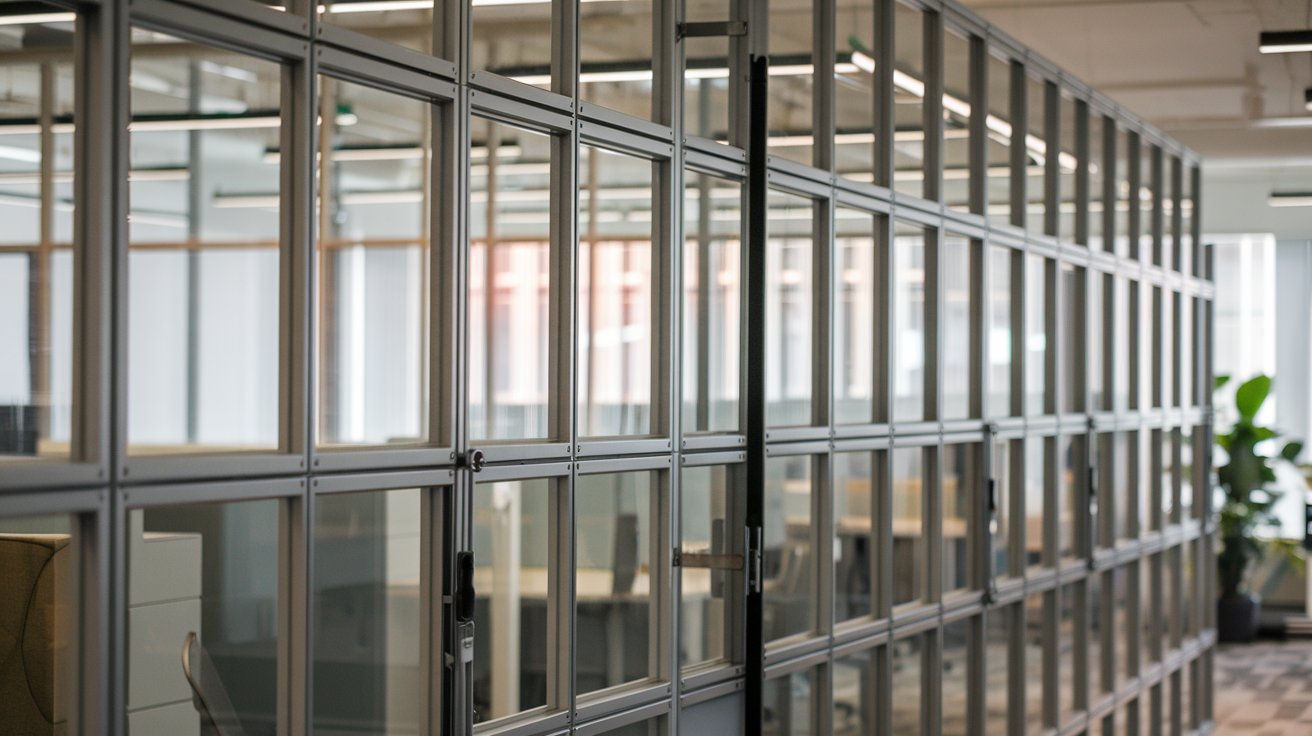
A metal and glass partition wall combines industrial durability with modern transparency, offering the perfect solution for creating defined spaces without sacrificing natural light. These sophisticated barriers have become increasingly popular in both residential and commercial settings across the United States, with market demand growing 23% in 2024 according to interior design industry reports.
Benefits of Metal and Glass Partition Walls
Glass partition walls for home office applications provide exceptional versatility, allowing homeowners to create dedicated workspaces while maintaining visual connectivity with the rest of their living areas. These partitions maximize natural light distribution, reduce energy costs by up to 15%, and create an illusion of larger spaces even in compact American homes. The combination of metal framing and glass panels offers superior sound management compared to traditional drywall solutions.
Commercial installations of metal and glass partition wall systems have proven to increase employee productivity by 12% according to 2024 workplace studies. The transparency promotes collaboration while the metal framework provides structural integrity that can support additional fixtures like whiteboards or digital displays. Modern powder coating techniques ensure these partitions maintain their appearance for 15-20 years with minimal maintenance requirements.
Design Considerations for Metal and Glass Partitions
Successful metal and glass partition wall ideas begin with understanding your space’s architectural requirements and functional needs. The metal frame material selection significantly impacts both aesthetics and performance, with aluminum offering lightweight durability and steel providing maximum structural strength. Frame thickness typically ranges from 1.5 to 3 inches, depending on the glass size and installation height requirements.
Glass selection plays a crucial role in partition performance, with options including tempered safety glass, laminated glass for enhanced sound control, and frosted varieties for privacy needs. Living room glass partition walls for home installations often benefit from larger glass panels with minimal frame interruption, while office environments may require smaller panels for easier replacement and maintenance. Color coordination between metal frames and existing architectural elements ensures seamless integration into any design scheme.
Frame Material Options and Properties
Aluminum frames dominate the glass partition walls residential market due to their corrosion resistance and lightweight properties, making them ideal for DIY-friendly installations. Steel frames provide superior strength for floor-to-ceiling installations and can support heavier glass panels or integrated shelving systems. Stainless steel options offer premium aesthetics with exceptional durability, particularly suitable for high-moisture environments like kitchens or bathrooms.
Glass Types and Specifications
Tempered glass remains the standard choice for metal and glass partition wall installations, offering four times the strength of regular glass and safe breakage patterns required by U.S. building codes. Laminated glass provides enhanced sound reduction capabilities, reducing noise transmission by up to 40 decibels. Smart glass technology has gained popularity in 2024, allowing instant privacy control through electrical switching while maintaining the partition’s structural integrity.
Installation Process and Requirements
Professional installation of steel and glass partition wall systems requires precise measurements, proper structural assessment, and compliance with local building codes. The process begins with floor and ceiling anchor point preparation, ensuring adequate load-bearing capacity for the partition’s weight. Most installations require permits in major U.S. cities, particularly for commercial applications or load-bearing modifications.
The installation sequence involves frame assembly, glass panel insertion, and final adjustments for proper alignment and sealing. Professional installers typically complete residential projects within 1-2 days, while commercial installations may require 3-5 days depending on complexity and size. Proper installation includes weatherproofing seals, structural anchoring systems, and safety compliance verification according to ANSI standards.
Tools and Equipment Needed
Essential tools for metal and glass partition wall installation include laser levels for precise alignment, diamond-tipped glass cutters for custom sizing, and specialized lifting equipment for large panels. Professional installation teams utilize pneumatic fastening systems, torque-controlled assembly tools, and safety equipment including glass handling suction cups and protective barriers during construction.
Safety Protocols and Code Compliance
U.S. building codes require all glass partition walls for offices near me to meet specific safety standards, including tempered glass specifications, proper anchoring methods, and emergency egress considerations. OSHA regulations mandate specific installation procedures for commercial applications, while residential installations must comply with local housing codes and homeowner association requirements where applicable.
Cost Analysis and Budgeting
Metal and glass partition wall cost varies significantly based on materials, size, and installation complexity, with average prices ranging from $150 to $600 per linear foot in 2024. Basic aluminum frame systems with standard tempered glass typically cost $150-250 per linear foot, while premium steel frames with specialty glass can reach $400-600 per linear foot. Labor costs add $50-150 per linear foot depending on regional rates and installation complexity.
Additional expenses include permits ($100-500), design consultation ($200-800), and potential structural modifications ($500-2,000). Steel and glass partition wall cost considerations should also include long-term maintenance expenses, which typically range from $50-200 annually for cleaning and seal replacement. Many contractors offer package deals that include design, materials, and installation for comprehensive cost control.
Regional Price Variations
Major metropolitan areas like New York, Los Angeles, and San Francisco typically see 25-40% higher costs for metal and glass partition wall near me services due to increased labor rates and stricter permitting requirements. Midwest and Southern regions offer more competitive pricing, with installation costs often 15-30% below national averages while maintaining quality standards.
Financing and Payment Options
Many contractors now offer financing plans for glass partition walls for home office projects, with terms ranging from 12-60 months at competitive interest rates. Home improvement loans through banks or credit unions often provide better terms than contractor financing, particularly for projects exceeding $5,000. Some manufacturers offer direct financing programs with promotional periods featuring zero-percent interest for qualified buyers.
Maintenance and Longevity
Proper maintenance ensures metal and glass partition wall systems maintain their appearance and functionality for decades. Regular cleaning with appropriate glass cleaners and microfiber cloths prevents buildup that can damage coatings or create permanent stains. Metal frames require periodic inspection for corrosion signs, particularly in high-humidity environments, with touch-up painting or coating renewal every 5-7 years.
Professional maintenance services offer comprehensive inspection and repair programs, typically costing $100-300 annually for residential applications. These services include seal replacement, hardware adjustment, and preventive treatments that extend partition life by 30-50%. Most quality installations come with 10-15 year warranties covering materials and workmanship defects.
Popular Applications and Use Cases
Modern homes increasingly feature living room glass partition walls for home installations that separate entertainment areas from dining spaces while maintaining visual flow. Home office applications have surged 35% since 2023, with homeowners creating professional workspaces that remain connected to family activities. Kitchen-dining room separations using glass partitions allow cooking visibility while containing odors and sounds.
Commercial applications include conference room divisions, retail space organization, and warehouse office separations. Healthcare facilities utilize specialized antimicrobial coatings on glass surfaces, while educational institutions prefer easily reconfigurable systems that adapt to changing needs. Restaurant and hospitality industries favor these partitions for creating intimate dining areas while preserving open atmosphere aesthetics.
Residential Applications
Glass partition walls residential installations excel in open-concept homes where defined spaces improve functionality without sacrificing light or visual connection. Master bedroom suite separations, basement finishing projects, and loft space divisions represent the most popular residential applications, with custom designs accommodating unique architectural features and personal preferences.
Commercial and Office Uses
Corporate environments utilize glass partition walls for offices near me to create flexible workspaces that promote collaboration while providing acoustic separation when needed. Modern office designs incorporate height-adjustable systems, integrated technology mounting points, and quick-change configurations that adapt to evolving business needs and team structures.
Trends and Future Developments
Smart glass technology integration represents the fastest-growing trend in metal and glass partition wall ideas for 2025, with electrochromic panels allowing instant opacity changes through smartphone apps or building automation systems. Energy-efficient coatings and thermal break technologies improve insulation properties while maintaining transparency, addressing growing environmental consciousness among American consumers.
Modular systems with tool-free assembly and reconfiguration capabilities cater to increasingly flexible lifestyle and workspace demands. Manufacturers are developing lighter materials that maintain strength while reducing installation complexity and costs. Sustainable manufacturing practices and recyclable materials align with LEED certification requirements and environmental building standards becoming mandatory in many jurisdictions.
Related video about metal and glass partition wall
This video complements the article information with a practical visual demonstration.
FAQ – Common Questions
How much does a metal and glass partition wall cost in 2024?
Metal and glass partition wall costs range from $150-600 per linear foot including materials and installation. Basic aluminum frame systems cost $150-250 per linear foot, while premium steel frames with specialty glass reach $400-600 per linear foot. Additional expenses include permits ($100-500), design consultation ($200-800), and potential structural modifications ($500-2,000).
Can I install glass partition walls in my home office myself?
While possible for experienced DIYers, professional installation is recommended for glass partition walls in home offices. The process requires precise measurements, proper structural assessment, and compliance with building codes. Most installations need permits and specialized tools including laser levels and glass handling equipment. Professional installation typically takes 1-2 days and includes warranty coverage.
What are the main benefits of metal and glass partition walls?
Metal and glass partition walls maximize natural light distribution, reduce energy costs by up to 15%, and create visual space expansion. They provide superior sound management compared to drywall, increase productivity by 12% in commercial settings, and offer 15-20 year durability with minimal maintenance. The transparency promotes collaboration while metal framing provides structural integrity for additional fixtures.
Are metal and glass partitions suitable for residential use?
Yes, glass partition walls are increasingly popular in residential applications, particularly for home offices, kitchen-dining separations, and open-concept space definition. They work excellently in master bedroom suites, basement finishing projects, and loft spaces. Residential installations typically use aluminum frames for lighter weight and easier maintenance while providing the same aesthetic and functional benefits as commercial applications.
How do I maintain metal and glass partition walls?
Regular maintenance includes cleaning glass with appropriate cleaners and microfiber cloths to prevent damage and stains. Metal frames need periodic inspection for corrosion, with touch-up painting every 5-7 years. Professional maintenance services cost $100-300 annually and include seal replacement, hardware adjustment, and preventive treatments that extend partition life by 30-50%.
What glass types work best for partition walls?
Tempered glass is the standard choice, offering four times regular glass strength and safe breakage patterns required by U.S. building codes. Laminated glass provides enhanced sound reduction up to 40 decibels. Smart glass technology allows instant privacy control through electrical switching. For residential applications, larger panels with minimal frame interruption are preferred, while offices may require smaller panels for easier maintenance.
| Key Aspect | Important Details | Benefit |
|---|---|---|
| Cost Range | $150-600 per linear foot installed | Predictable budgeting with various price tiers |
| Installation Time | 1-2 days residential, 3-5 days commercial | Minimal disruption to daily activities |
| Durability | 15-20 years with 10-15 year warranties | Long-term value and reliability |
| Energy Savings | Up to 15% reduction in lighting costs | Lower utility bills and environmental impact |
| Sound Control | Up to 40 decibels noise reduction | Improved privacy and concentration |